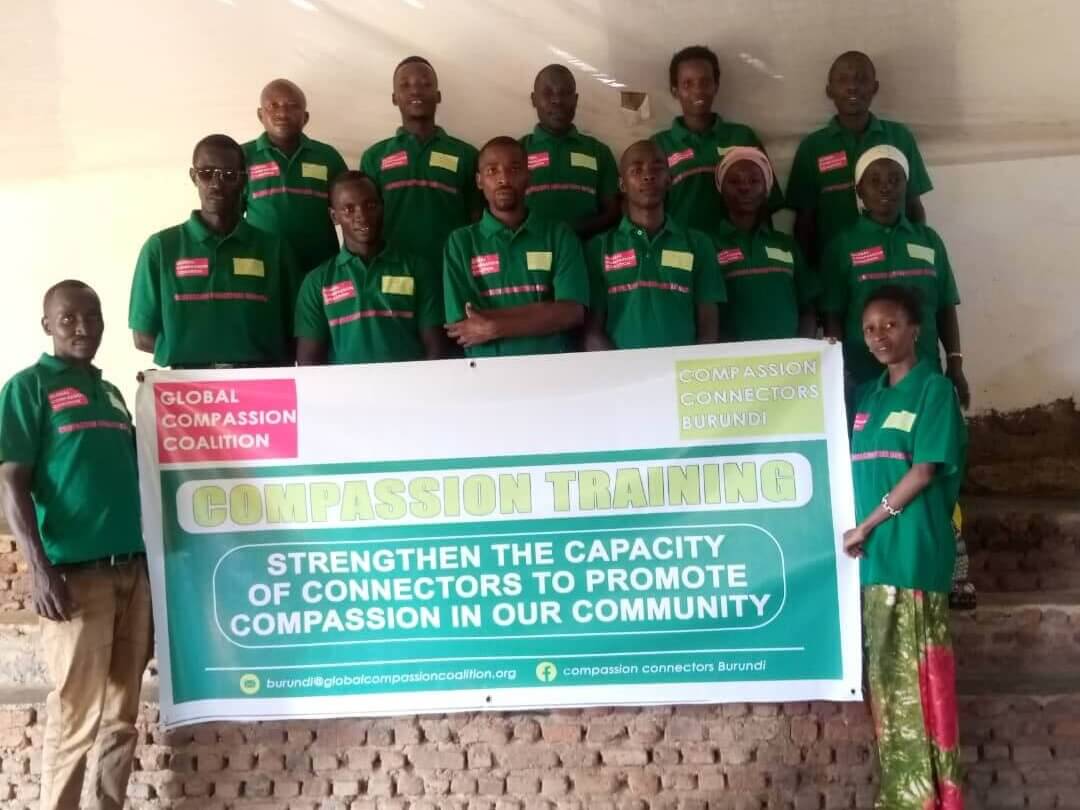
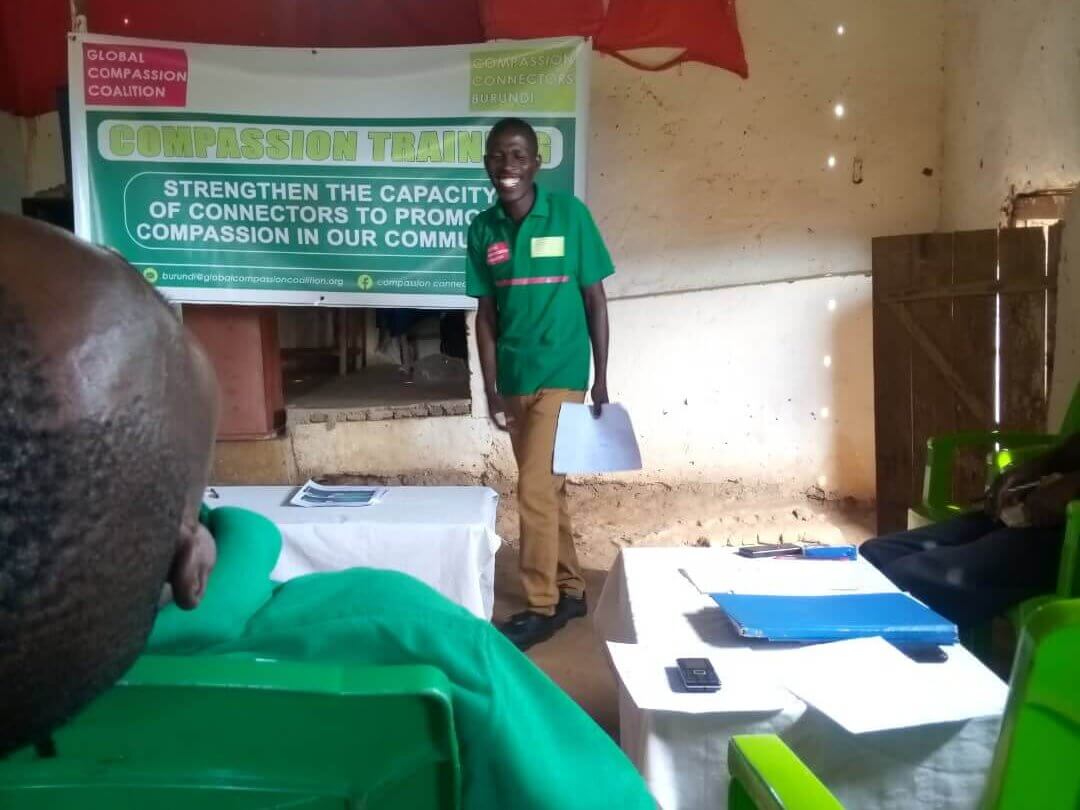
In a powerful step forward for the Compassion Connectors’s grassroots work, twelve new Connectors have been trained in Burundi, equipped with the knowledge, skills, and motivation to build more compassionate communities across the country. The training, led by Emmanuel Baranzigiye, National Coordinator for Connectors in Burundi, focused on grounding participants in the vision of the Coalition and helping them begin their journey as changemakers.
The training opened with a deep dive into the Global Compassion Coalition’s vision—to build a world where people and planet value and help each other—and mission—to inspire compassionate actions to improve everyone’s life. Emmanuel emphasized that every project Connectors initiate should grow out of these guiding principles. Compassion, he reminded the group, is not just an emotion, but a way of living.
Rediscovering What It Means to Be Compassionate
Participants explored the roots and power of compassion, starting with a simple understanding: compassion means really seeing the other. It involves recognizing our shared humanity, our shared struggles, and making a commitment to alleviate suffering—both in ourselves and in others.
Emmanuel explained how compassion isn’t just a personal feeling, but something that evolves in community. Science shows that it emerged from the mother-child bond and helped early human societies survive. Today, compassion underpins everything from healthcare to education to social welfare.
But compassion doesn’t always come easily. Barriers—such as inequality, competition, and disconnection—can dim our natural tendency to care. That’s why Connectors play such an important role: they help create environments where compassion can flourish again.
Compassion as a Force for Societal Transformation
The group also explored why compassion matters not just at an individual level but for society as a whole. Studies have shown that people who practice compassion experience more joy, stronger relationships, and better mental health. And when compassion becomes part of a community’s culture, trust, cooperation, and inclusion follow.
From families to schools, workplaces to entire communities, compassion offers a blueprint for how we organize and relate to one another. It challenges the old ways of hoarding power and resources and invites us to “care and share” instead—building systems that uplift everyone.
From Learning to Action
Each Connector left the training with a clear next step: to decide where and how they want to act. Emmanuel introduced the four pathways available to Connectors:
- Compassionate Communities – building neighbourhoods where everyone feels welcomed and included.
- Compassionate Workplaces – transforming work cultures through care and mutual respect.
- Compassion Circles – small groups for reflection, listening, and mutual support.
- Compassion Approaches – applying compassion to bigger issues like climate change or gender equality.
After choosing a pathway, Connectors identified the kind of mission they wanted to pursue—whether tackling loneliness, offering practical support, empowering others through skills, or simply creating space for people to practice compassion.
The training emphasized that even the smallest acts of compassion can catalyze real change. What matters is starting, staying connected to your motivation, and learning as you go.
Lighting the Flame
The Connectors were invited to find their personal why—to connect their values, skills, and aspirations to the work ahead. As Emmanuel reminded them, “We cannot build a compassionate world if we do not first live with compassion in our own hearts, in our own communities.”
Emmanuel has reported back to the GCC that he believes this deep-dive training session has helped to equip twelve new local leaders with the knowledge and early courage to make change.